The Future of meat
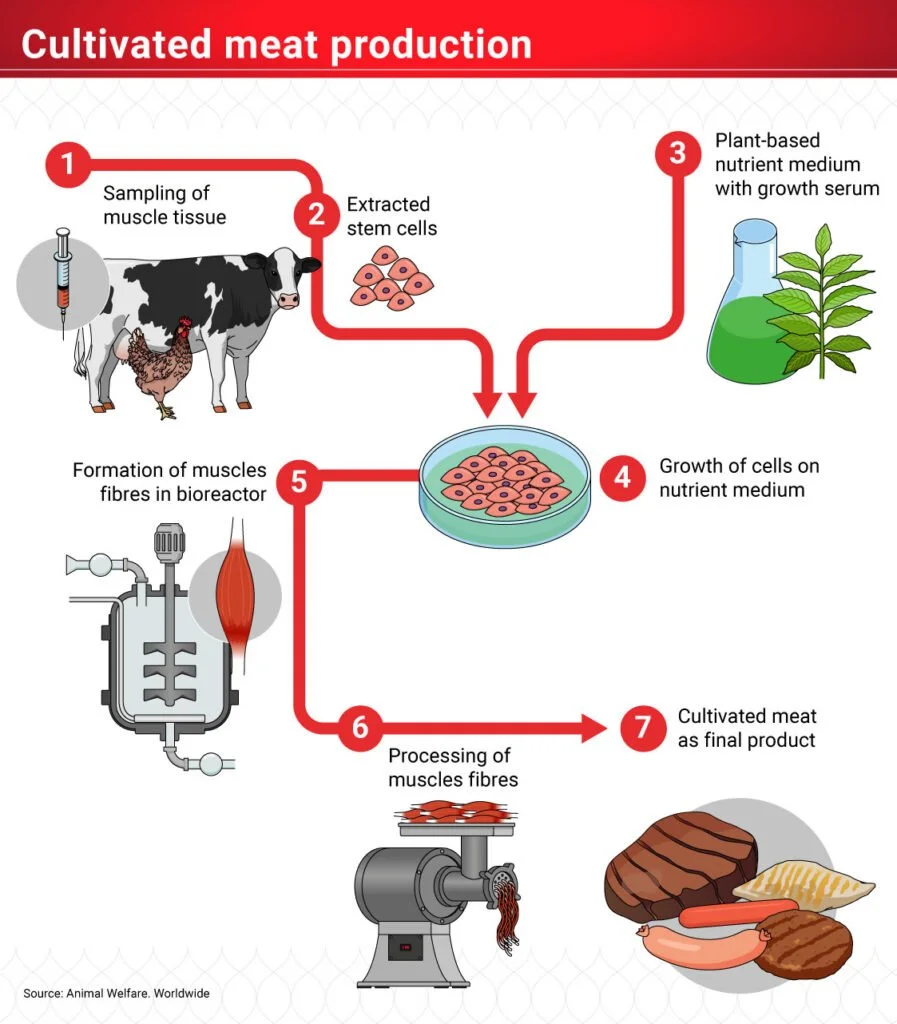
What is Lab-Grown or Cultivated Meat?
“Cultivated Meat” (CM) or Lab-Grown Meat or Cultured Meat refers to a nascent field of bioproducts that aim to replace conventional meat produced by farming and slaughter with analogous products made from animal cell culture. We should be exploring the opportunities from this innovative technology to enhance human well-being, reduce animal suffering, and mitigate at least some of the environmental impacts associated with conventional meat production for the government to consider investing in.
The Drivers and Challenges of CM
Cost Position – The techno-economic analysis demonstrates the art of the scale-up projection. It leverages conceptual process design, simulation, and equipment costing techniques to develop estimates of the capital, operating, and total production costs of technologies. Some scenarios have the total cost of goods sold anywhere from $3 to $50 higher than conventional meat in the next ten years. The COGS should continue to decrease, but will it ever be price competitive with conventional meat?
Environmental Impact – The life cycle assessment looks at cultivated meat production from cradle to facility gate. This means that all process inputs and outputs up to the meat leaving the facility are considered. CM scores much better than with all conventional meat environmentally. The most important drivers of the environmental impact of CM are processing energy, medium quantity, and medium composition. Producers use a mix of conventional and sustainable energy to achieve this feat. The hope is to one day use 100% renewable energy. CM production has the potential to significantly reduce the environmental impact of conventional meat production. This will help to mitigate the effects of climate change and reduce the pressure on natural resources
Consumer Acceptance - Accepting the safety, source, taste, and texture of cultured meat. The taste and texture of CM has the potential to be equal or greater than with conventional meat and nutritional values should eventually be deemed higher.
Food Safety - Cultivated meat is produced under controlled conditions, which means it is less prone to contamination by harmful bacteria or viruses. This will help to reduce the risk of foodborne illness. The scale required for making lab-cultured "meat" feasible for mass consumption will be the largest form of tissue engineering to exist. There are legitimate concerns the CM could introduce new kinds of genetically engineered cells into our diets.
Regulation - The US regulatory agencies USDA, FDA, and EPA all coordinate to continue implementing science-based policies. Only five months ago, CM was given the green light and considered safe to eat and held to the same dietary regulations and quality assessments as conventional meat. Labeling standards and patent protection need to continue being clear and routine.
Zoonotic Pandemics/ Viruses - Cultivating meat avoids the risk of fecal contamination and does not require many animals to live in close confinement. This, in turn, will drastically reduce the need for antibiotics in meat production as well as the risk of zoonotic pandemics from “wet markets.”
Ethical Considerations - A reasonable estimate is that about seventy billion land animals are raised and slaughtered for food each year. CM produces the meat we want while lessening the suffering we now inflict in factory farms.
Why is it important?
Cultivated meat is expected to have a number of advantages over traditional meat. The culturing process could enhance human health via management of harmful contents such as saturated fats and pathogens. CM producers are trying to replicate the taste and texture of conventional meat. Research and development efforts are underway to match the taste, nutrition, and texture of conventional meat so that consumers have access to familiar products. Most products initially available on the market are processed products (meatball, nuggets, dumplings), instead of structured products (NY strip streak, pork chop). So far, relatively few people have tasted CM, but the exposure and consumption are growing. CM would alleviate ethical concerns associated with industrial livestock operations such as factory farming and address global hunger. CM could also help slow climate change driven by greenhouse gas emissions such as carbon dioxide and methane. The food system is responsible for about a quarter of global greenhouse gas emissions, most of which are from animal agriculture. CM production can mitigate the chances of zoonotic pandemics and viruses such as Covid19.
How do we make it happen?
We need to recognize the global importance of CM by starting to invest in research and development through grants, incentives, tax breaks, and other funding programs. America can be the global leader if we help push the industry forward! We need to pass a bill I propose as a “Climate Change Mitigation Bill” which directly and indirectly allocates two billion dollars out of the trillion-dollar bill for mitigating climate risks in food production. We need money and muscle to propel this industry forward. It’s a win/win for America - showing it’s a global leader ecologically and economically by investing in the alternative protein industry. Taste and texture enhancements will be achieved by choosing specific species, starter cells, nutrients, or scaffolding. CM can be a much healthier product than conventional meat. A single genetic cell profile of one animal can create billions of pounds of meat. We can make the public more aware and pressure the government to assist in this new frontier of food.